Death Valley's main problem is that it is trying to kill you. Summer temperatures regularly exceed 120°F, with a recorded high of 134°F at Furnace Creek. The park service suspends programming and advises against hiking between May and September. Roads close during rare but intense flash floods. The park itself is larger than Connecticut, making it impossible to see in a day. The good news: the scenic drives work year-round with air conditioning. Lone Pine, on the west side, sits at 3,700 feet with significantly cooler temperatures and a film history museum worth seeing. Beatty, on the Nevada side, has a ghost town and an open-air museum of strange desert art. The Eastern Sierra offers escape to higher elevations when the valley floor becomes uninhabitable.
Indoor Options
Museum of Western Film History
Over 650 films were shot in the Alabama Hills and Owens Valley, from early Westerns to Iron Man. The museum displays costumes, props, and memorabilia. An 85-seat theater shows films in air conditioning. Staff can point you to specific filming locations.
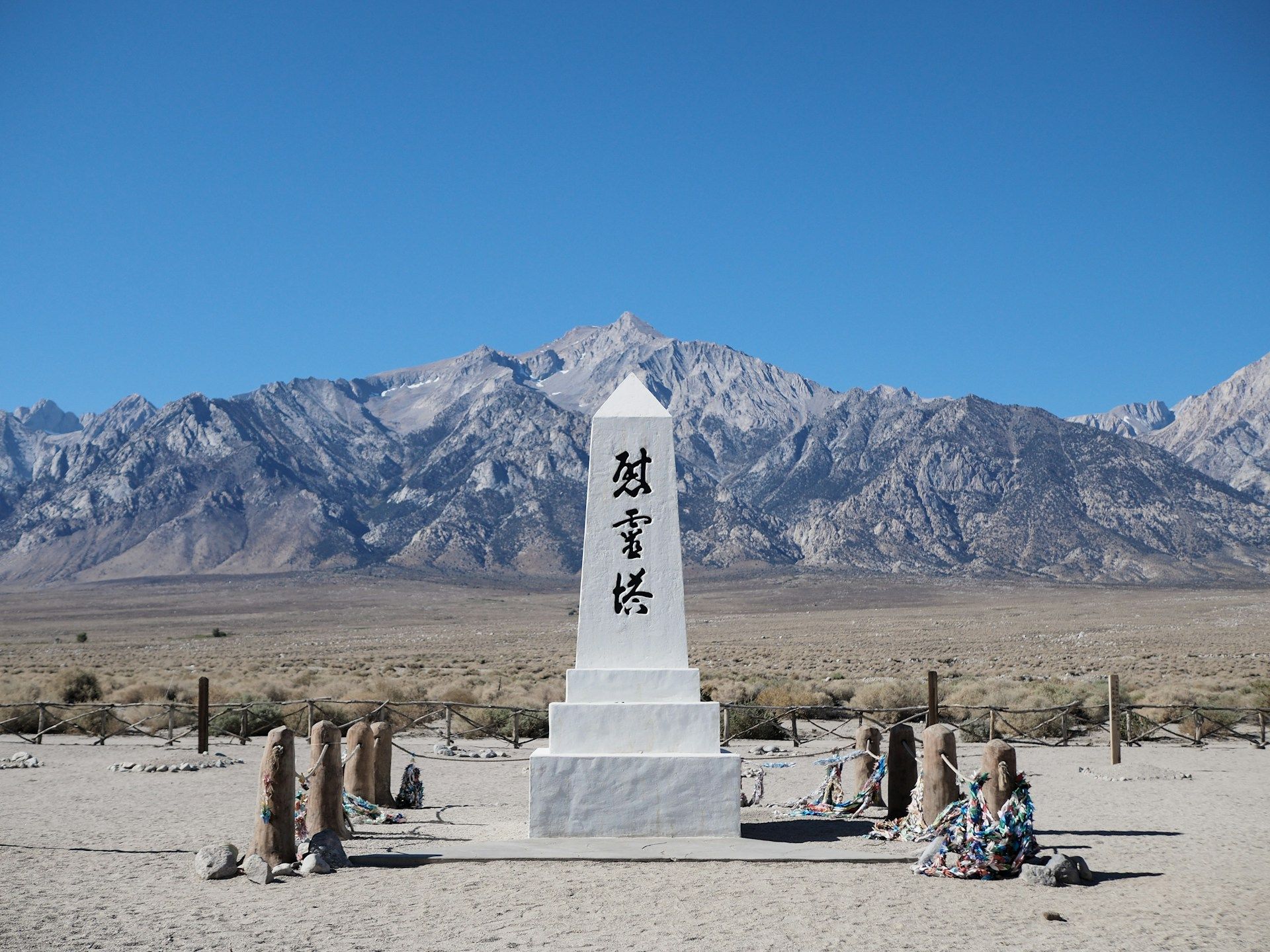
Manzanar National Historic Site
One of ten camps where the U.S. government imprisoned Japanese Americans during World War II. The interpretive center has extensive exhibits and a documentary film. The grounds include a reconstructed barracks and guard tower. Free admission. An important and sobering site.
Eastern California Museum
Regional history from Death Valley to Mono Lake. Mining equipment, Native American baskets, and photos from the era when this empty landscape was full of boomtowns. Small but well-curated. Free admission.
Furnace Creek Visitor Center
Air-conditioned refuge with exhibits on geology, wildlife, and human history. An 18-minute film provides park orientation. The famous thermometer is outside. This may be your only stop during summer heat.
Borax Museum
Outdoor display of mining equipment, stagecoaches, and a steam locomotive from the twenty-mule-team borax era. Adjacent to the ranch at Furnace Creek. Free. Works even in extreme heat since you can drive between displays.
Goldwell Open Air Museum
Large-scale outdoor sculptures in the desert near the Rhyolite ghost town. The centerpiece is Albert Szukalski's ghostly recreation of the Last Supper. A house made entirely of bottles. Penguin sculptures in the desert. Free. The kind of place that makes you question what you are looking at.
Nearby Alternatives
Alabama Hills
Rounded granite boulders at the base of Mount Whitney, used as a backdrop in hundreds of Western films and recent blockbusters. The Mobius Arch frames the Sierra peaks. Free, open year-round, significantly cooler than the valley floor. Dirt roads accessible by most vehicles.
Best for: Bizarre rock formations, film locations, cooler temperatures
Ancient Bristlecone Pine Forest
Home to Methuselah, a bristlecone pine over 4,800 years old. At 10,000 feet elevation, temperatures can be 50 degrees cooler than Death Valley. The trees are gnarled, twisted survivors of extreme conditions. A profound counterpoint to the barren valley below.
Best for: Oldest living trees on Earth, mountain escape from heat
Rhyolite Ghost Town
A boomtown that grew to 10,000 people in 1907 and was abandoned by 1920. The bank building, train depot, and bottle house remain. Free to explore. Adjacent to the Goldwell Open Air Museum. The Nevada desert reclaiming human ambition.
Best for: Mining history, photography, strange desert vibes
Red Rock Canyon State Park
Dramatic red and white cliffs where the El Paso Mountains meet the Mojave Desert. Used as a filming location for early Westerns. Less extreme than Death Valley but similarly stark. A good stopping point on the drive from Los Angeles.
Best for: Desert cliffs, camping, lower crowds
Ash Meadows National Wildlife Refuge
A desert oasis fed by an ancient aquifer. Home to 26 endemic species found nowhere else on Earth, including the Devils Hole pupfish. Boardwalks wind through crystal-clear springs surrounded by barren desert. The contrast is surreal. Free admission.
Best for: Desert springs, rare fish, unexpected greenery
Shortened Experiences
Badwater Basin
The lowest point in North America at 282 feet below sea level. A short boardwalk leads to the salt flats. In summer, limit your time outside the car. The sign marking sea level is on the cliff above.
Zabriskie Point
A viewpoint overlooking badlands eroded into golden waves. A short walk from the parking lot. Best at sunrise when the colors intensify. Named for a borax company executive, made famous by an Antonioni film.
Artist's Drive
A 9-mile one-way road through colorful volcanic and sedimentary rock. The Artist's Palette viewpoint shows oxidized metals creating bands of green, pink, and purple. Air-conditioned driving with short photo stops.
Dante's View
At 5,475 feet, significantly cooler than the valley floor. Views of Badwater Basin, the salt flats, and the Panamint Range. On clear days, you can see both the lowest and highest points in the contiguous United States.
Mesquite Flat Sand Dunes
Accessible dunes near Stovepipe Wells. Walk as far as you like and turn around. Best at sunrise or sunset for light and temperature. In summer, sand temperatures can exceed 200°F at midday. Do not go barefoot.
Rainy Day Activities
Check road conditions before driving
Flash floods wash out roads regularly. The park has no cell service in most areas. If roads are questionable, you may be stranded. Check conditions at the visitor center or call ahead before entering.
People have died driving into flooded roads in Death Valley. Turn around, don't drown.
Watch for ephemeral waterfalls
Rain creates temporary waterfalls throughout the park. Mosaic Canyon and Golden Canyon can have flowing water after storms. The transformation is dramatic. Experienced photographers position themselves for these rare moments.
Stay out of canyons during active storms. Flash floods arrive without warning.
Wait for the superbloom
Significant winter rain can trigger a spring wildflower bloom. The valley floor erupts in color. Superbloom years are rare and unpredictable, but when they happen, Death Valley becomes one of the most photographed landscapes in the country.
Check park announcements. Superbloom conditions are announced in advance when they are expected.
Drive to Lone Pine
The Museum of Western Film History, Alabama Hills, and Mount Whitney portal are all accessible from Lone Pine. At 3,700 feet, temperatures are more moderate. Real restaurants and lodging options.
Highway 190 can close during floods. Check CalTrans before driving west.
Tips
- Summer temperatures regularly exceed 120°F. The park service recommends against hiking between 10am and 4pm from May through September. People die here every year from heat exposure.
- There is no cell service in most of the park. Download maps and tell someone your plans before entering. The park is larger than Connecticut with limited services.
- Furnace Creek has the only reliable gas inside the park. Fill your tank before entering. Running out of gas in Death Valley is a life-threatening emergency.
- The spring-fed pool at the Ranch at Furnace Creek is open to day visitors. During extreme heat, swimming may be the only activity that makes sense.
- Dante's View sits at 5,475 feet and can be 20-30 degrees cooler than Badwater Basin. When the valley floor is uninhabitable, higher viewpoints still work.