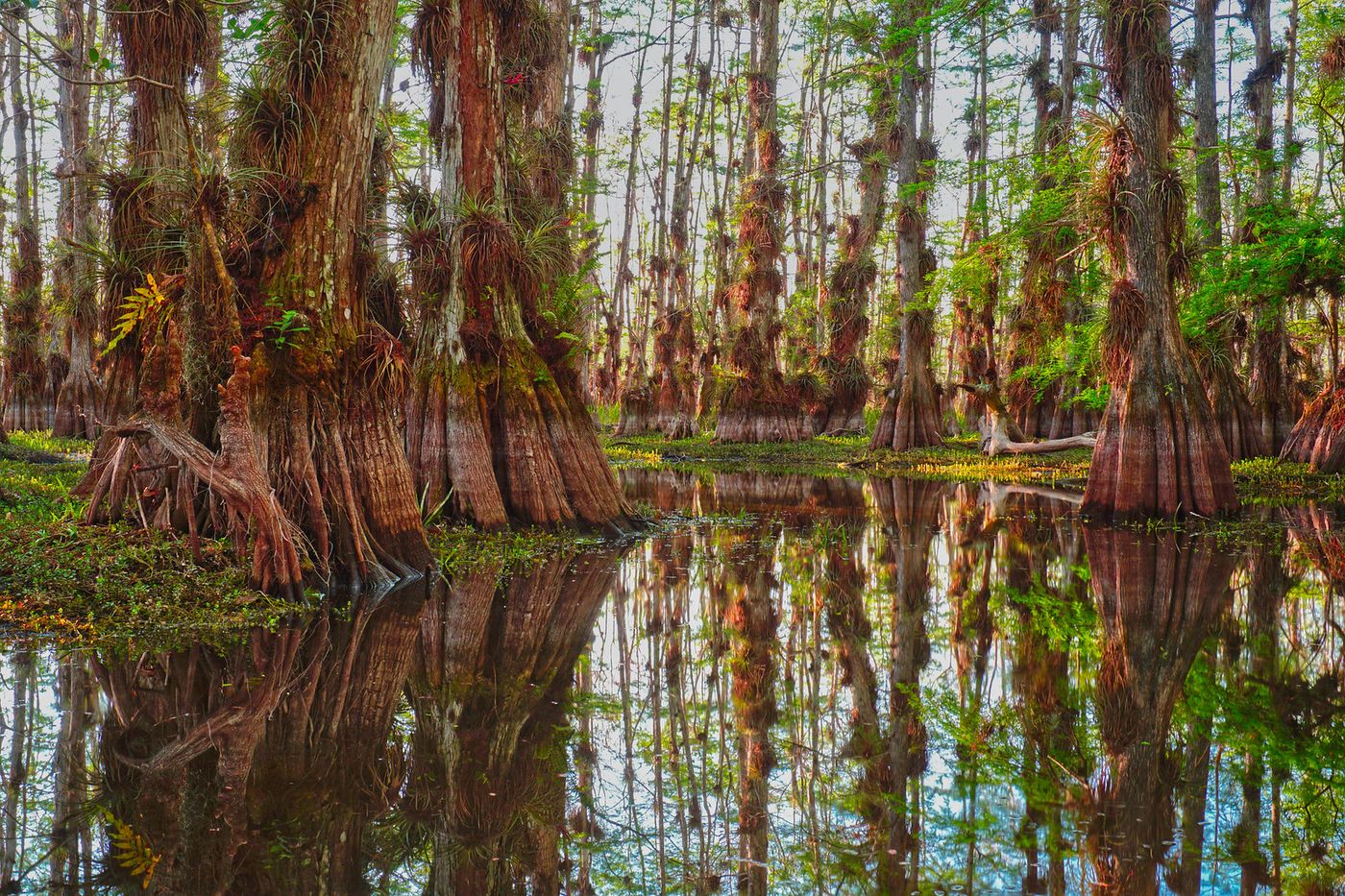
Everglades National Park
1.1 million visitors concentrated at Shark Valley and the Anhinga Trail. Tour buses line up at Flamingo. Airboats prohibited inside park boundaries, limiting the classic swamp experience. The River of Grass is genuine wilderness, but the visitor experience has been curated to the point of feeling managed.
How They Compare
Why Consider Big Cypress National Preserve
Big Cypress National Preserve protects 729,000 acres of the same South Florida ecosystem that flows into Everglades National Park. The difference is designation: as a preserve rather than a park, Big Cypress allows activities Everglades prohibits. Airboat tours operate legally. Off-road vehicles access remote areas. Hunting and fishing continue as they have for generations. The result is a wilder, less polished experience. The same cypress swamps, alligators, and wading birds, but without the boardwalks and tour bus crowds. For those seeking authentic swamp rather than interpreted wilderness, Big Cypress delivers.
Who Should Choose Big Cypress National Preserve
Airboat enthusiasts
Legal airboat access for the quintessential Florida swamp experience Everglades prohibits.
Wildlife photographers
Fewer crowds mean better wildlife encounters. Florida panther habitat offers hope of rare sightings.
Adventure seekers
Off-road vehicle access, primitive camping, and swamp walks offer experiences beyond boardwalks.
Spontaneous travelers
No timed entry, no reservations, just pull off Tamiami Trail and explore.
Highlights
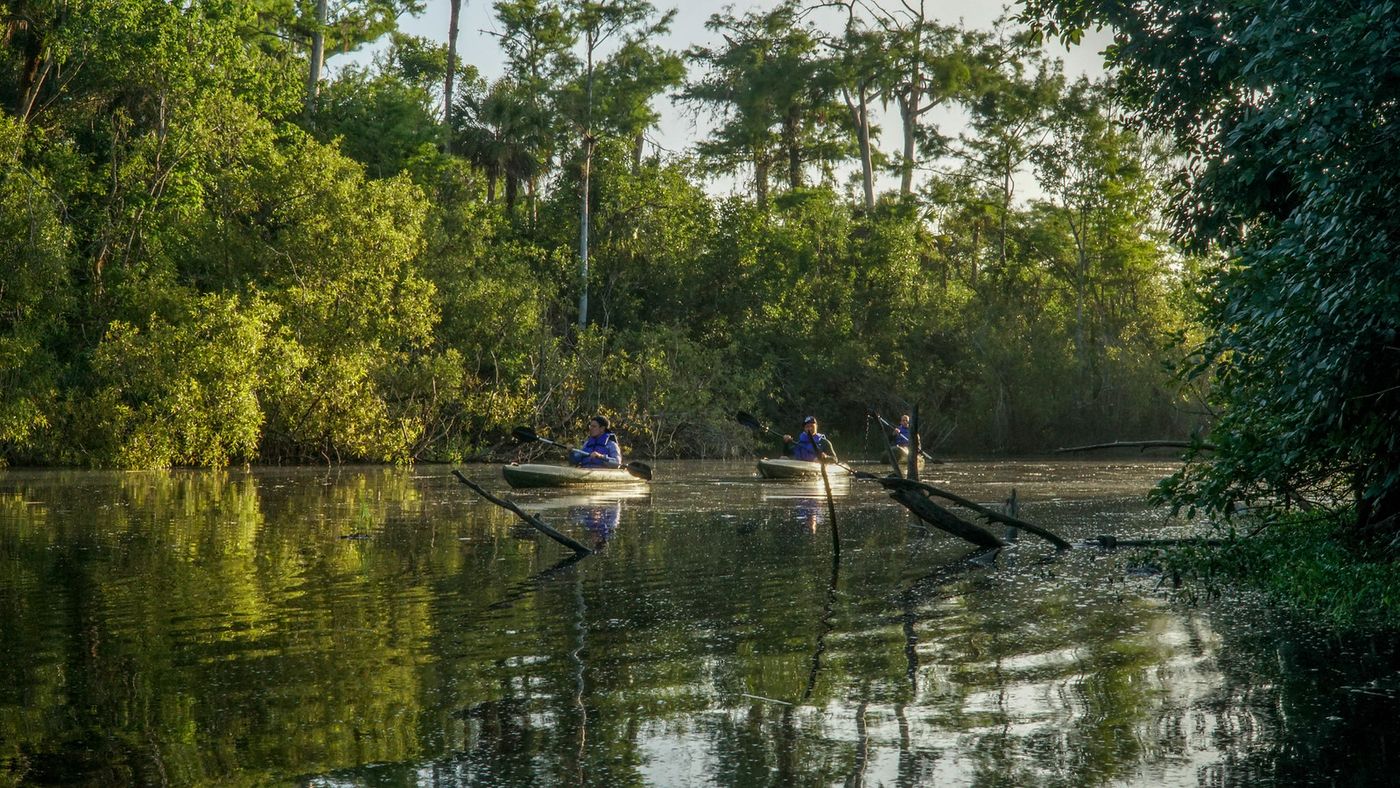
What makes Big Cypress worth choosing.
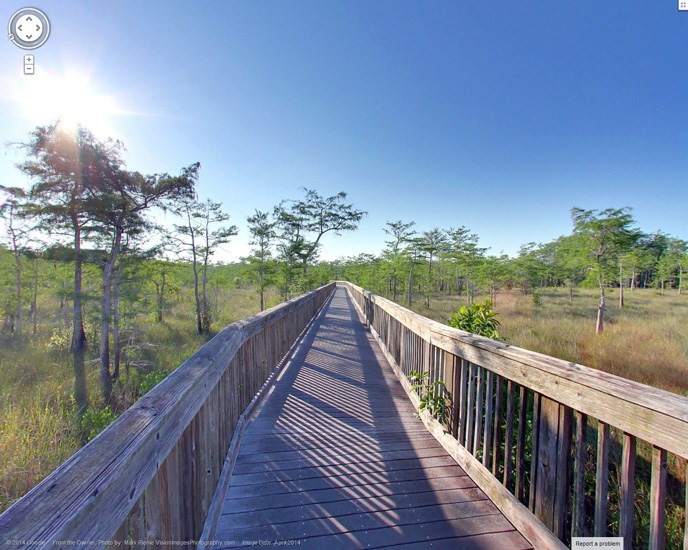
Kirby Storter Roadside Park
A boardwalk through dwarf cypress prairie right off Highway 41. Easy wildlife viewing with minimal crowds.
Big Cypress Gallery
Clyde Butcher's photography gallery showcasing black-and-white swamp images. Swamp walks available from the property.
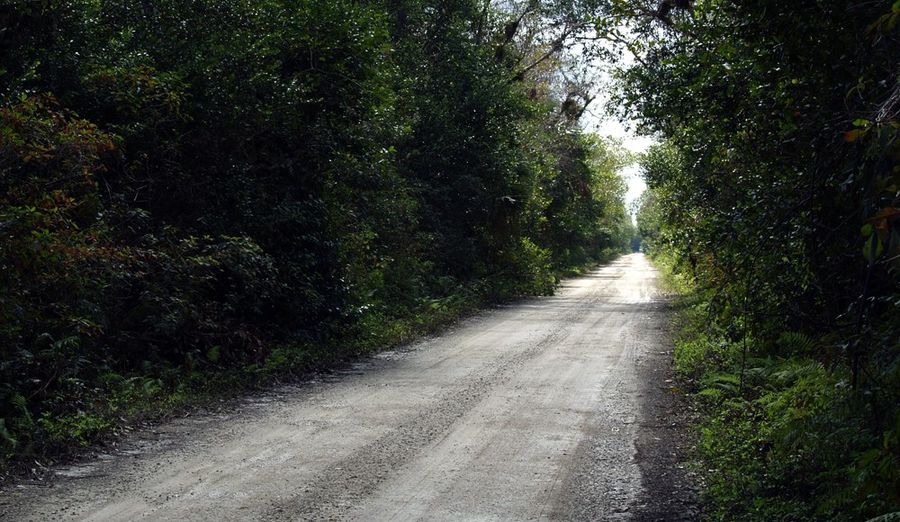
Loop Road
A 24-mile unpaved road through the preserve's interior. Alligators sun on the road surface.
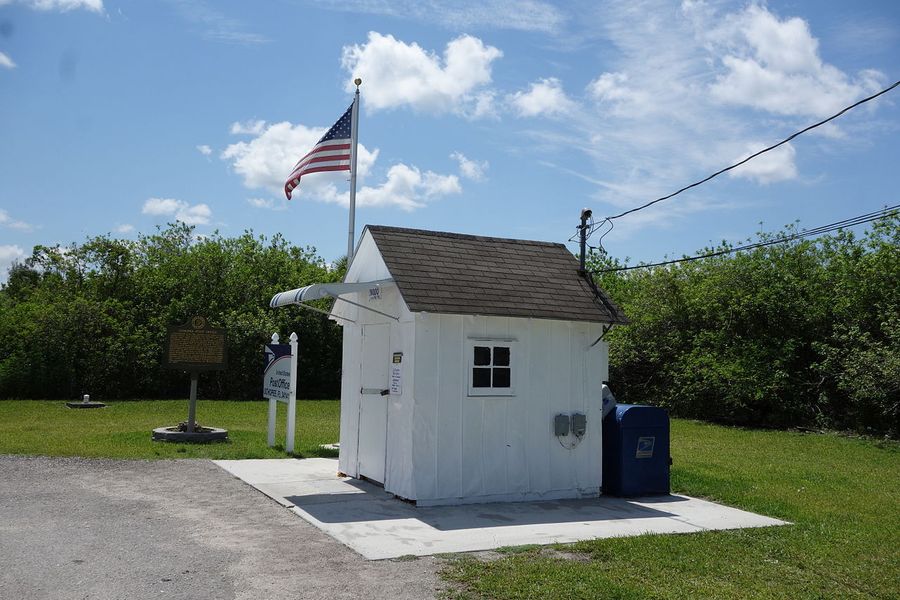
Ochopee Post Office
The smallest post office in America - a roadside curiosity that captures Old Florida character.
Insider Advice
- Winter dry season (December-April) is prime time. Water levels drop, concentrating wildlife.
- Summer means mosquitoes, heat, and afternoon thunderstorms. Visit November-March for comfort.
- Highway 41 (Tamiami Trail) runs through the preserve. Most access points are along this road.
- Airboat tours operate from several outfitters along Highway 41. No need to book far ahead.
- The preserve adjoins Everglades National Park. Combine both for a complete South Florida experience.